The shop came first
Cardio Online Superstore has been selling exercise equipment in Australia since 2019. More than a thousand products, at every price from the cheapest machine on the market to commercial gym floors. ON:PACE was started by the people who run it.
The useful part isn’t the catalogue. It’s the phone. A shop gets a second conversation a brand never hears — the one eighteen months later, when a deck starts slapping, or a motor cuts out, or someone works out the belt they bought is too narrow to run on.
Do that for a few years and you stop reading spec sheets the way a buyer does. You notice which numbers mattered and which were there to fill a row. You notice the questions people only think to ask afterwards.
Before they buy, people ask a shorter list than the industry behaves as though they do. Will it fit. Will it be loud. Is it big enough to run on. What happens if it breaks.
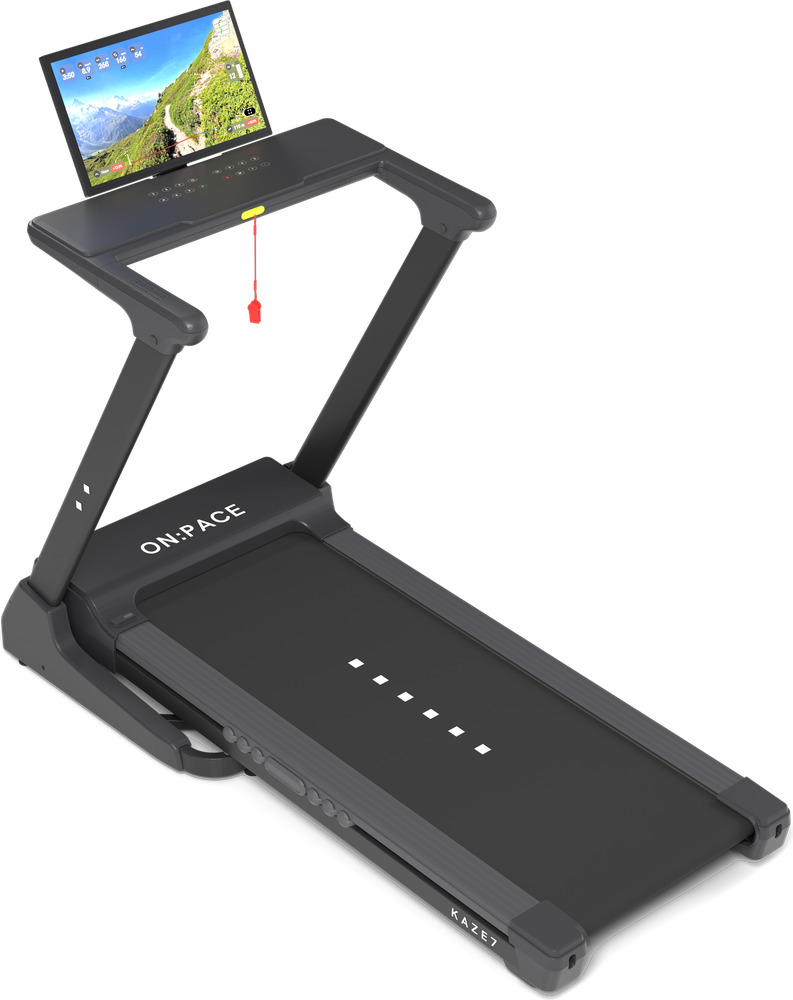
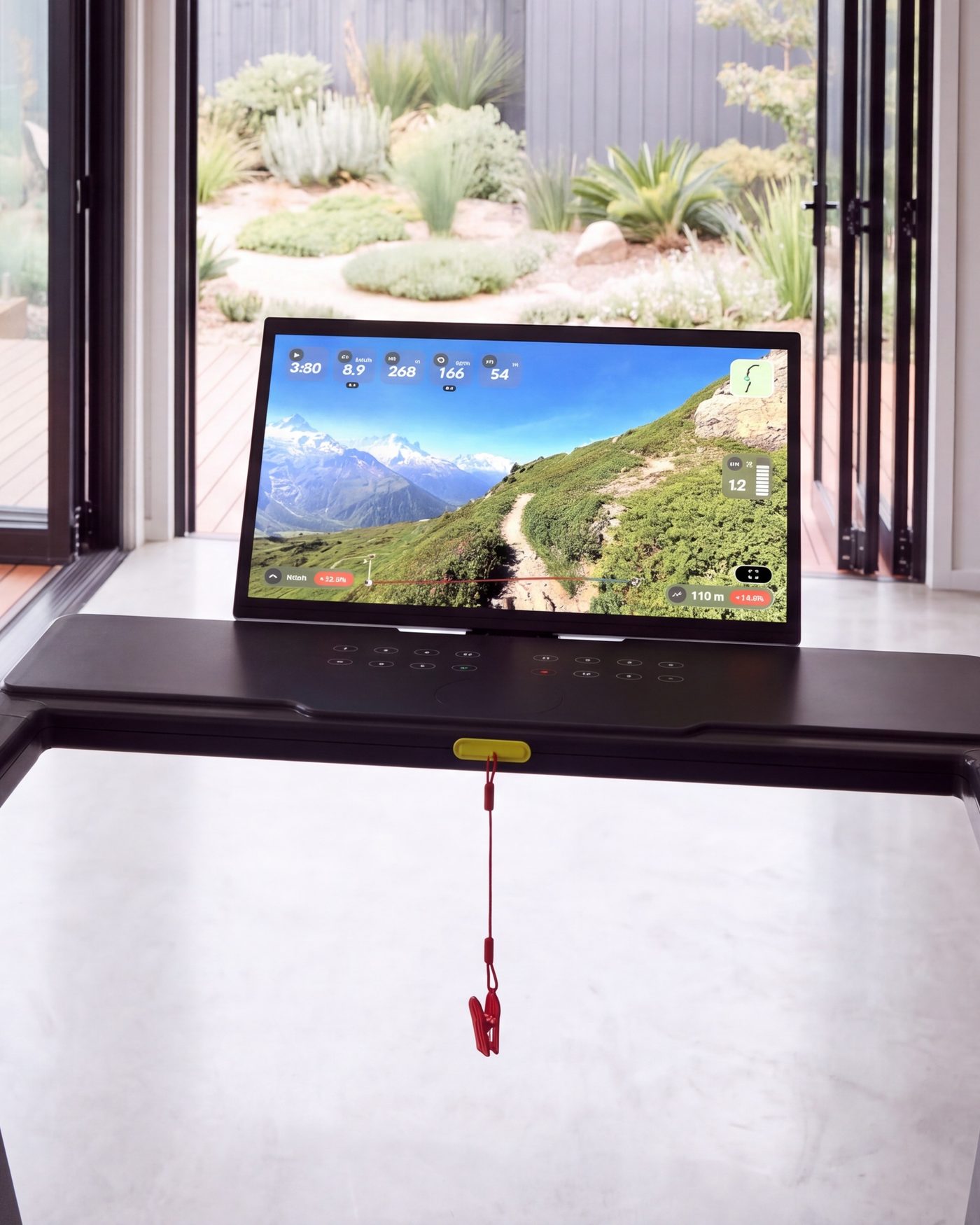
ON:PACE is what you build when you’ve spent years answering those four. It’s why belt width leads the spec instead of the motor. Why the frame is covered for ten years rather than for a word. Why the screen doesn’t need a subscription to switch on. And why we call the entry machine a walking machine, when calling it a runner would sell more of them.
What we didn’t do, and won’t claim: we didn’t engineer these machines. We chose the platforms, specified them, designed the console art, put our marks on them and our warranty behind them. The engineering came from a factory that’s been building treadmills for years. The choices came from a shop that’s been selling them.
Cardio Online Superstore is still where you buy one — as a retailer, not a parent company you never see. ON:PACE sits on their site next to every brand we compete with. Same page, same spec table. It has to earn the sale there like anything else.
Restraint is the whole design
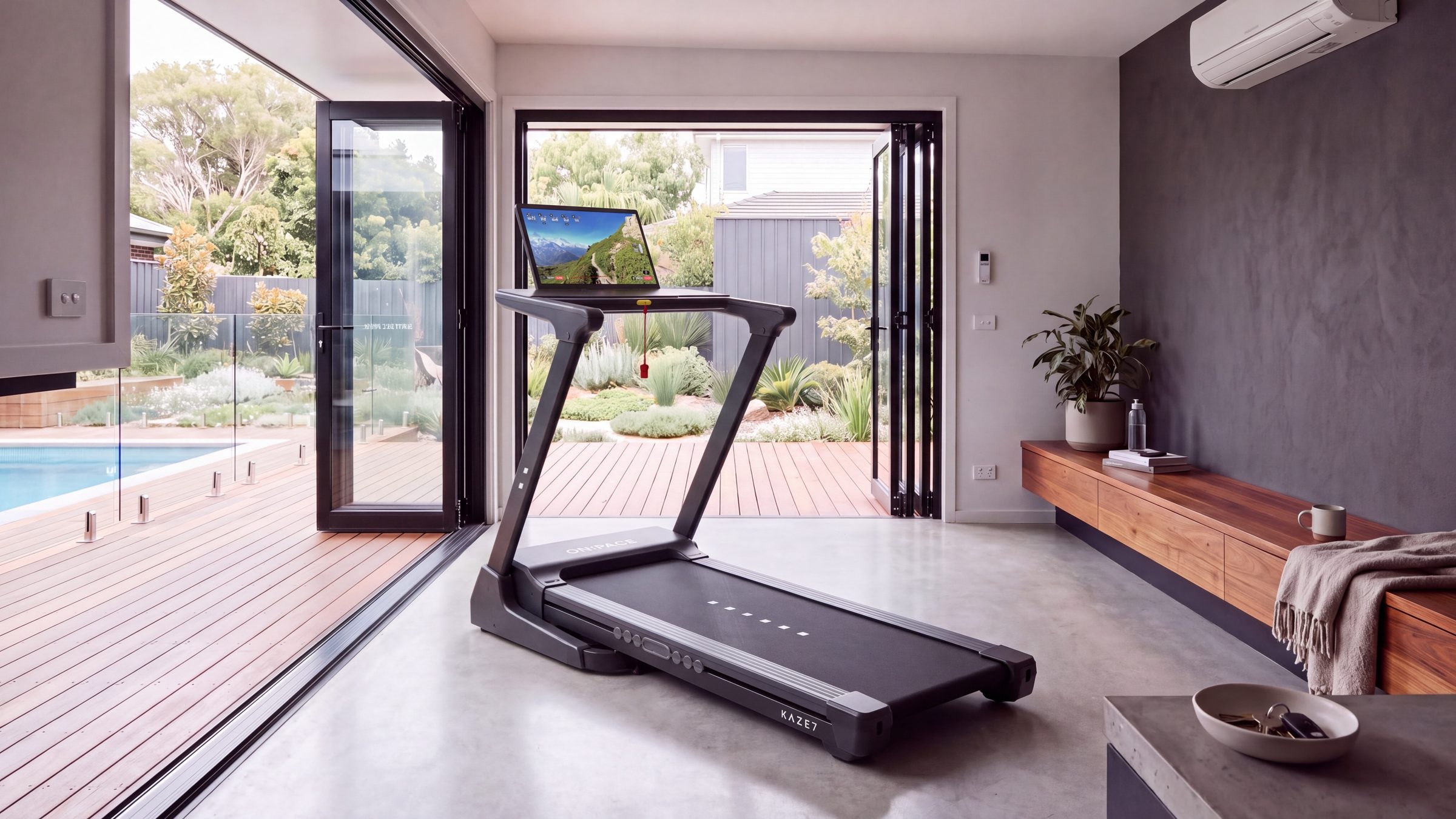
Look at enough treadmills and a pattern shows up. The ones that read as expensive are quiet: one colour, one mark, nothing highlighted. The ones that read as cheap have a badge on every panel, a bright end cap, and a name for every part.
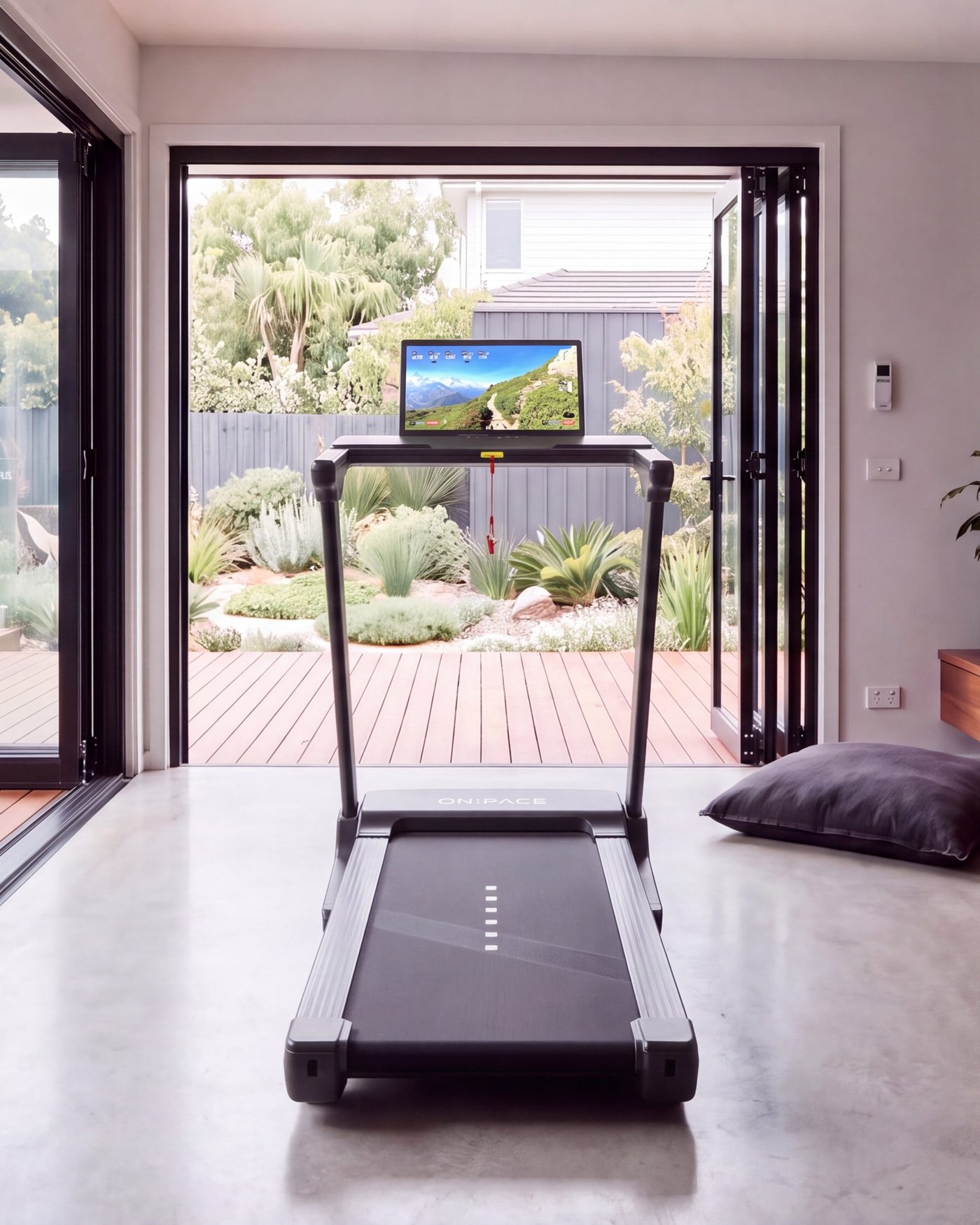
So there’s no accent colour in this brand, and there won’t be one. The machines are one finish. Our mark goes on the frame and the console and nowhere else. That’s not minimalism for its own sake. It’s what a machine looks like when nobody had to distract you from it.
We don’t name ordinary parts
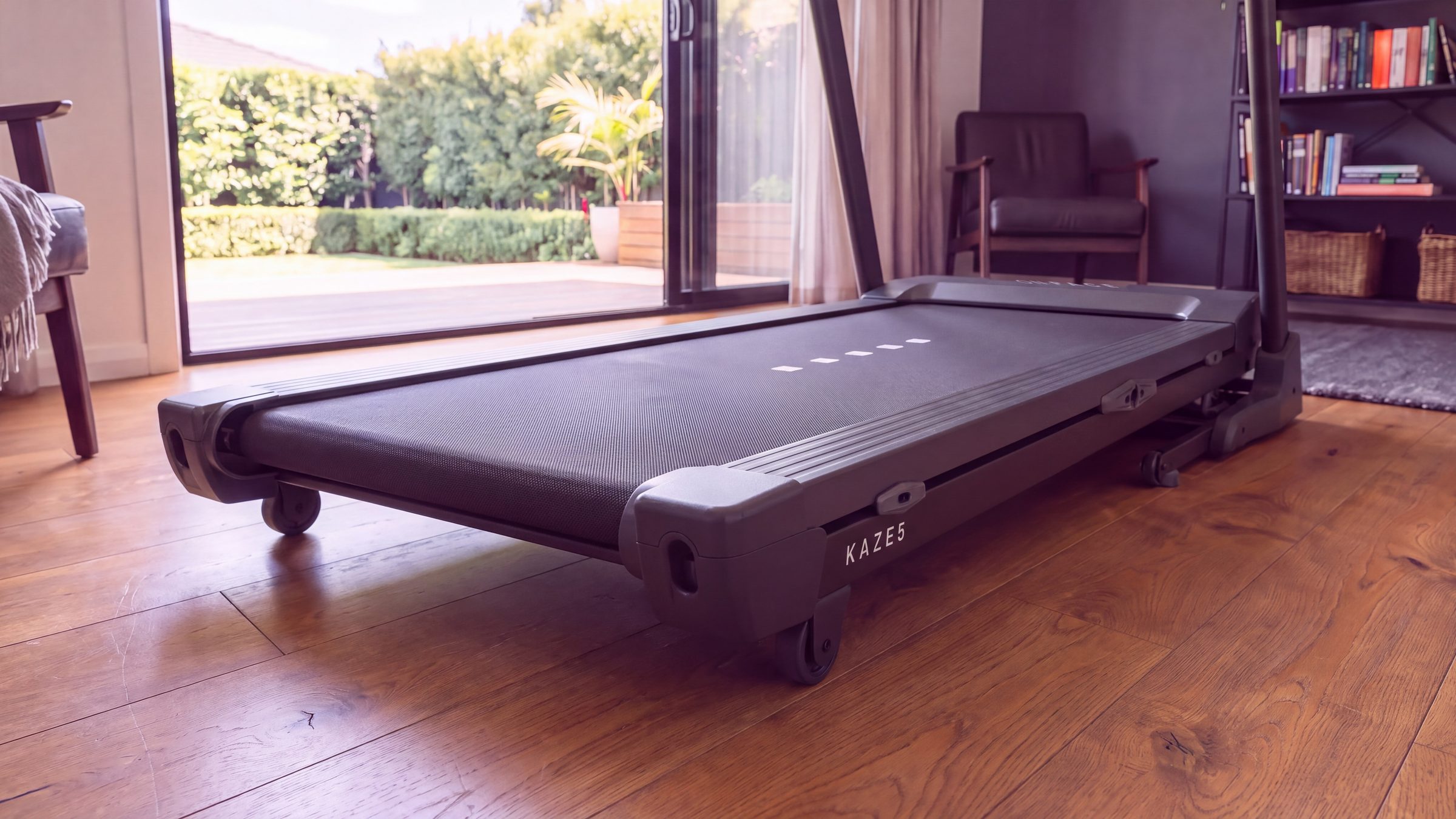
The deck is cushioned. It isn’t a trademarked impact system, because we didn’t invent one. We specified a deck. The motor is a motor. The fold is a fold.
Naming a component implies it’s unique to you when it isn’t. And once a brand starts, it can’t stop. The next model needs a new name, and eventually nothing can be compared to anything. If a part of one of our machines ever earns a name, it’ll earn it over years of people using it. Not on a launch day.
Horsepower is the number we won’t compete on
Treadmill motor power is an uncontrolled unit. Across the market you’ll find the same class of machine quoted in horsepower, in continuous horsepower, in lower-case hp and in watts. Sometimes more than one of those on a single page.
There’s no standard behind the figure and nobody referees it. So two machines aren’t comparable on it, even when both are stated in good faith.
That has a consequence we’d rather say out loud. A machine quoting the power it holds continuously will always look weaker than one quoting the power it reaches for a moment. Publishing a more careful number inside a broken unit doesn’t fix the unit. It just makes the careful machine look worse.
So we move the comparison somewhere you can check it. Every treadmill sold in Australia carries a compliance plate, and that plate has to state the rated power input in watts. Anyone can print any horsepower they like. Nobody may misstate what’s on that plate.
It’s on the machine, in your house, and you can read it. On ours and on anyone else’s. Our plate figures go into the spec table as soon as we’ve read them off a production machine. Until then the row stays empty. That’s uncomfortable, and still better than a number you’d have to take on trust.
One piece of arithmetic that rarely gets mentioned. A standard Australian 10 A power point has a hard ceiling of about 2,400 VA. Advice written for a 120 V market doesn’t transfer, and no domestic treadmill sold here can draw more than that outlet allows, whatever the box says.
Belt width, because that’s what you’ll feel
Running surface is the spec most likely to decide whether you keep using a machine. It’s also the one most often quoted in whichever unit flatters it. We give every belt in centimetres, width first, everywhere we publish — the site, the carton, the manual.
Width matters more than length once you’re tired, because that’s when a stride starts to wander. It’s also why we describe the SOYO 5 as a walking and light jogging machine. Its 42 cm belt is the compact tier, and selling it as anything else is the fastest way to get it back.
Ten years, and not the word “lifetime”
Lifetime warranties are common enough here that buyers have quietly stopped believing them. Everyone knows it doesn’t mean their lifetime. It means a service life defined somewhere in the fine print. A number you can count beats a word you have to go and check.
Ten years on the frame, five on the motor, three on parts, two on labour. The same on the entry machine as on the flagship. A longer term on one model is worth less than the same term on all of them.
And the warranty is Australian. You contact us, we assess it here, and parts ship from here.
A hundred days, and the freight is on us
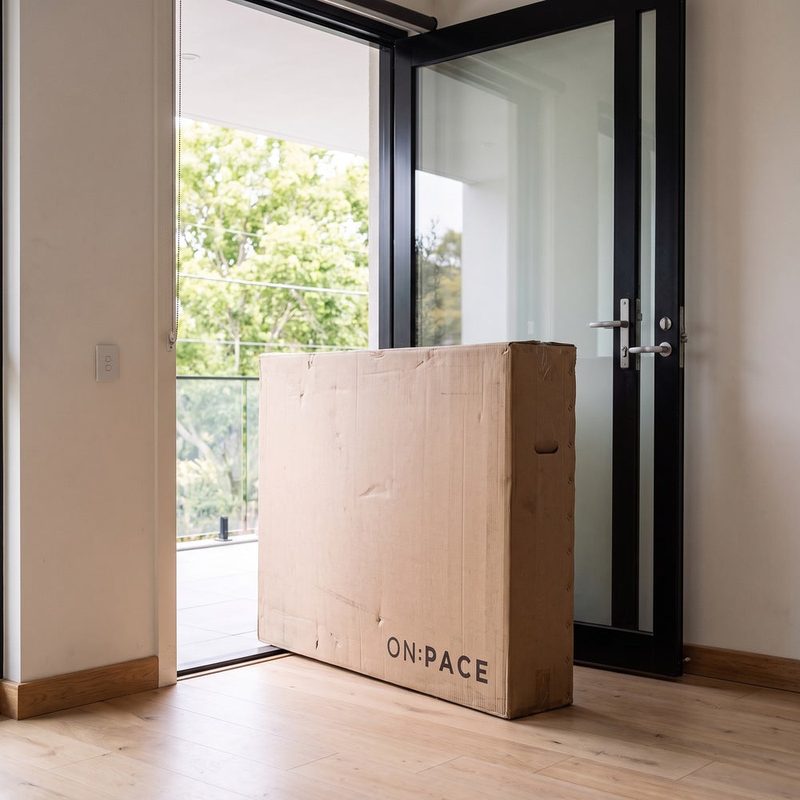
The 100 Day Money Back Guarantee is ours, and the freight is the part that decides whether anyone ever uses it. A treadmill is a big, heavy carton. Getting one back out of a house is the bit most returns policies in this category go quiet about. If you send it back, we pay the freight.
A hundred days is deliberately longer than a trial. It’s long enough to train through a full block, and find out whether the machine became part of your week or is quietly folded in a corner.
What we’re not
These three are built for people training at home. They’re not light-commercial equipment, they’re not built for a gym floor with a queue, and they’re not built for sprint work past the speeds in the table. Saying so costs us a few sales and saves a lot of disappointment.
The machines are made to our specification by a third-party factory, which is how almost every treadmill at this price is made. You won’t find a heritage story on this site, because there isn’t one.